

Understanding how different units of volume relate to one another forms an essential part of navigating everyday tasks, from filling a swimming pool to measuring ingredients in the kitchen. The relationship between cubic metres and litres stands as one of the most straightforward yet crucial conversions within the metric system. Grasping this connection not only simplifies practical calculations but also deepens one's appreciation for how measurements of space and capacity interlink seamlessly across various contexts.
The fundamentals of volume measurement
What is a cubic metre?
A cubic metre represents the standard unit for measuring volume in the metric system. Imagine a perfectly formed cube where each edge measures precisely one metre in length. This three-dimensional space encapsulates what we refer to as a cubic metre. It serves as the benchmark for quantifying larger volumes, particularly in construction, shipping, and industrial applications. The beauty of the cubic metre lies in its simplicity and scalability, allowing for consistent measurement across diverse fields. Whether assessing the capacity of a storage container or calculating the displacement of water in a reservoir, the cubic metre provides a reliable foundation for understanding how much space an object or substance occupies.
Understanding the Litre as a Unit of Volume
The litre, on the other hand, offers a more familiar and accessible unit for everyday use. Commonly employed for measuring liquids such as water, milk, or petrol, the litre bridges the gap between abstract mathematical concepts and tangible, real-world quantities. Interestingly, the litre holds a special designation within the metric system as it corresponds precisely to one cubic decimetre. This equivalence means that when you picture a cube with sides of ten centimetres each, you are visualising one litre. The litre's practicality shines through in countless scenarios, from purchasing beverages at the supermarket to dosing medications. Its widespread adoption reflects the need for a manageable, comprehensible unit that simplifies daily life without sacrificing accuracy or consistency.
Breaking down the conversion process
Visualising a Cubic Metre with Decimetres
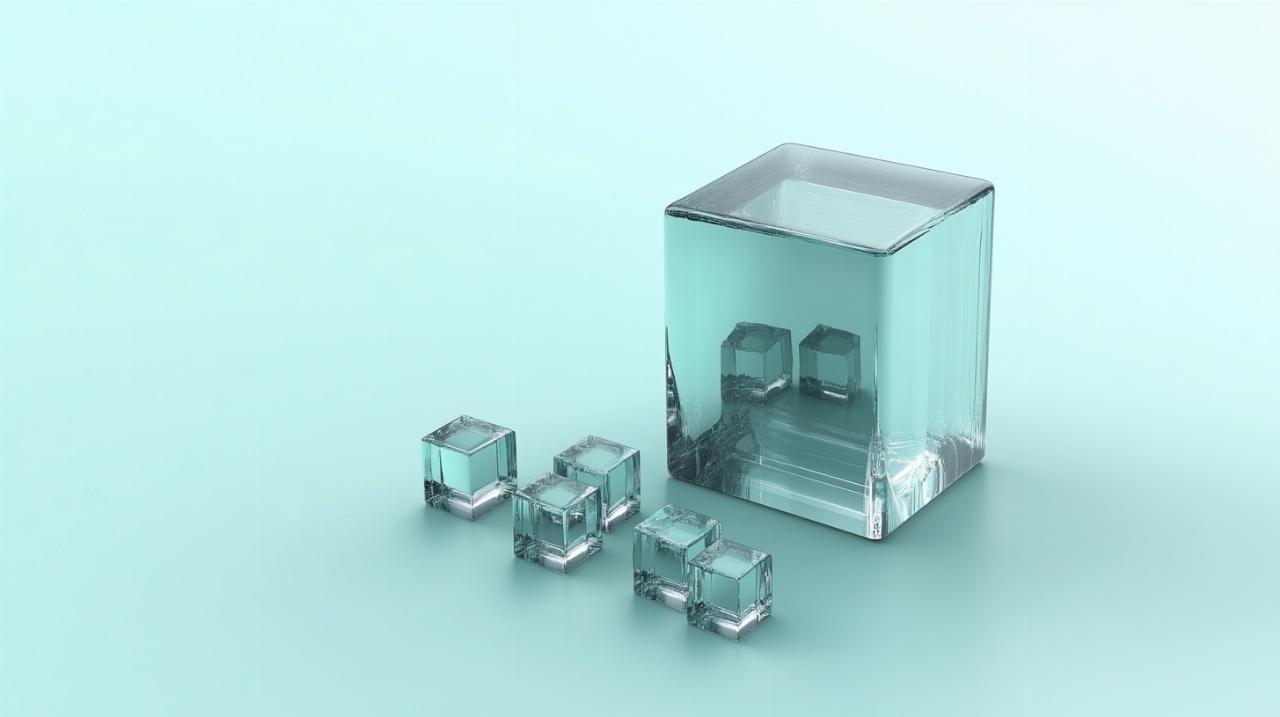
To truly grasp the conversion between cubic metres and litres, one must delve into the intermediate step of decimetres. A metre comprises ten decimetres, meaning that when constructing a cubic metre, each dimension extends across ten decimetres. Visualising this transformation helps clarify the relationship between larger and smaller units. Picture slicing a metre-long edge into ten equal segments, each representing one decimetre. When applied to all three dimensions of a cube, this subdivision results in a structure composed of ten layers, each layer containing ten rows, and each row holding ten individual cubic decimetres. This mental exercise reveals the intricate yet orderly nature of the metric system, where each unit relates to the next through consistent powers of ten.
The mathematical relationship between cubic decimetres and litres
The mathematical elegance of the metric system becomes evident when examining the connection between cubic decimetres and litres. Since one litre equals one cubic decimetre, the calculation simplifies dramatically. A cubic metre, broken down into its constituent parts, contains ten decimetres along each edge. Multiplying these dimensions together yields ten times ten times ten, which equals one thousand cubic decimetres. Given that each cubic decimetre corresponds to one litre, it follows that one cubic metre contains exactly one thousand litres. This precise equivalence eliminates ambiguity and ensures that conversions remain straightforward. The simplicity of multiplying by one thousand to convert cubic metres into litres underscores the metric system's design philosophy, where units scale smoothly and predictably, facilitating both scientific inquiry and everyday problem-solving.
Practical applications and conversion tips
Converting Cubic Metres to Litres in Everyday Situations
In practical terms, converting cubic metres to litres proves invaluable across numerous contexts. Consider the task of filling a swimming pool, which typically requires substantial volumes of water. If a pool's capacity is specified in cubic metres, knowing that each cubic metre translates to one thousand litres allows for accurate planning regarding water supply and costs. Similarly, when ordering bulk quantities of liquids such as heating oil or industrial chemicals, suppliers often quote prices per cubic metre. Converting these figures into litres helps consumers and businesses alike make informed decisions and compare prices effectively. Even in smaller-scale scenarios, such as determining the volume of a bathtub or a rainwater collection barrel, applying this conversion ensures precision. The process remains remarkably simple: take the number of cubic metres and multiply by one thousand to obtain the equivalent in litres. This straightforward approach demystifies volume calculations and empowers individuals to handle measurements confidently.
A quick reference table for volume units
Navigating the broader landscape of volume units benefits greatly from a clear reference framework. Within the metric system, volume measurements cascade smoothly from the minute to the vast. At the smallest scale, one thousand cubic millimetres equal one cubic centimetre, which in turn matches one millilitre. Scaling upward, ten millilitres make one centilitre, and ten centilitres constitute one decilitre, equivalent to one hundred millilitres. Continuing this progression, one thousand cubic centimetres or one cubic decimetre equals one litre, equivalent to one thousand millilitres or ten decilitres. For larger volumes, ten litres form one decalitre, while ten decalitres combine to create one hectolitre, totalling one hundred litres. At the apex of common usage, one thousand cubic decimetres or one cubic metre equals one thousand litres, also known as one kilolitre. These relationships extend further when considering bodies of water, where volumes are often measured in cubic kilometres. For instance, Lake Superior in North America holds approximately twelve thousand one hundred cubic kilometres of water, while the Caspian Sea contains around seventy-eight thousand seven hundred cubic kilometres. Understanding these conversions not only aids practical tasks but also enriches one's appreciation for the scale and diversity of volumes encountered in nature and human endeavour. Whether measuring an eye drop bottle at fifteen millilitres or contemplating the vastness of Lake Baikal at twenty-three thousand six hundred cubic kilometres, the metric system provides a coherent, scalable framework for quantifying the space that substances and objects occupy.