
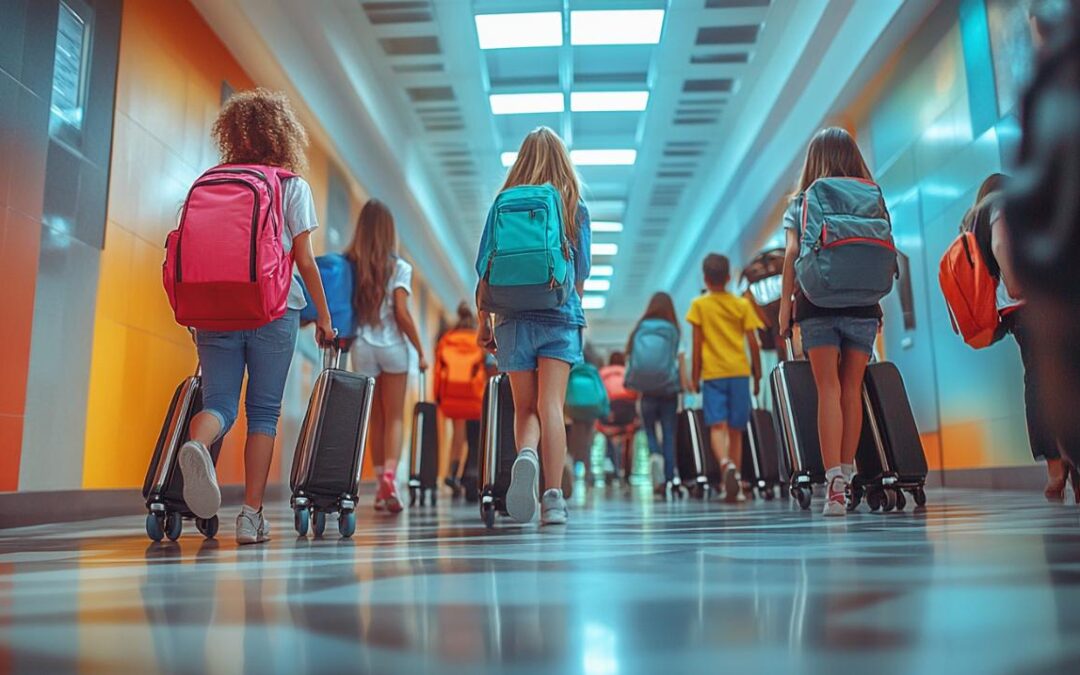
Selecting the right school bag can be a daunting task for parents and students alike, especially when considering the practical benefits of wheeled designs. Rolling backpacks have become increasingly popular as a solution to the heavy loads that school children often carry, helping to reduce strain on young backs and shoulders. When searching for the best rolling backpacks for school, it is essential to consider a range of features that ensure durability, comfort, and practicality. This guide explores the key characteristics that define a quality wheeled backpack, from robust construction to clever storage solutions, ensuring that students can transport their essentials safely and stylishly throughout the academic year.
Build quality and longevity
When investing in a rolling backpack, the first consideration should always be the quality of construction. A well-made bag will withstand the daily rigours of school life, from being dragged across rough pavements to being tossed into lockers. Robust materials play a crucial role in this regard, and polyester is often the material of choice for many manufacturers due to its exceptional durability and resistance to wear and tear. Reinforced stitching at stress points, such as where the handles attach and along the seams, further enhances the bag’s longevity. Brands like JanSport Driver 8 and High Sierra Freewheel have built their reputations on offering backpacks that can endure years of use, with the former even providing a lifetime warranty to underscore their confidence in the product’s durability. Checking user ratings and reviews can provide valuable insights into how well a particular model holds up over time, with many highly rated options scoring above 4.5 out of 5 stars on popular retail platforms.
Robust materials and reinforced stitching
The choice of fabric and the quality of stitching are paramount to ensuring that a rolling backpack can cope with the demands placed upon it. Polyester construction is favoured for its ability to resist fraying and tearing, even when subjected to frequent use. Reinforced stitching, particularly around the base and handle attachment points, helps to prevent the bag from falling apart under the weight of heavy textbooks and school supplies. Some models also feature a reinforced bottom, which provides additional protection against abrasion and extends the overall lifespan of the bag. For instance, the Tilami Rolling College Backpack includes both a reinforced base and wheel covers, ensuring that the most vulnerable parts of the bag are well protected. These design elements are essential for parents who wish to avoid the inconvenience and expense of replacing a damaged backpack mid-term.
Weather resistance and protective features
British weather can be unpredictable, and a rolling backpack must be able to protect its contents from rain and moisture. Many quality backpacks now come with a water-resistant coating, which helps to keep books, electronics, and other essentials dry during sudden downpours. Waterproof materials take this protection a step further, offering peace of mind for parents whose children walk or cycle to school. The Matein 17-inch Rolling Backpack, for example, is noted for its waterproof construction, making it a reliable choice for all weather conditions. Additionally, some bags include waterproof covers that can be deployed when needed, providing an extra layer of defence against the elements. These protective features are particularly important for students who carry laptops or tablets, as water damage can be costly and disruptive to their studies.
Storage space and organisation
A rolling backpack must offer sufficient storage capacity to accommodate all the essentials that students need to carry throughout the school day. From textbooks and notebooks to lunch boxes and sports kit, the demands on a school bag are considerable. The capacity of a backpack is typically measured in litres, with most models suitable for school use ranging from 34 to 45 litres. For younger children, a slightly smaller capacity may be more appropriate, ensuring that the bag is not too cumbersome or heavy when fully loaded. The JanSport Driver 8, with its 36-litre capacity, strikes a good balance between space and manageability, making it a popular choice for high school students. Meanwhile, the High Sierra Freewheel offers 34 litres of storage, which is ample for most secondary school requirements. It is important to remember that even with a wheeled design, the bag should not exceed weight recommendations, which suggest that children should carry no more than ten per cent of their body weight to avoid strain.
Adequate capacity for school essentials
The size and capacity of a rolling backpack should be carefully matched to the age and needs of the student. For primary school children, bags with a height of 35 to 45 centimetres are generally sufficient, while secondary school students may require larger options over 45 centimetres to accommodate bulkier items such as A4 folders and multiple textbooks. The maximum recommended weight for primary school bags is around three kilograms, whereas secondary school bags can safely hold up to five kilograms. Models such as the Totto unisex bag, which measures 37 by 25 by 52 centimetres and weighs 2.3 kilograms, are well suited to younger pupils, offering ample space without being overly heavy. For older students, the J World New York Sundance Laptop Rolling Backpack provides a generous 38.3 litres of storage, ensuring that there is room for everything from textbooks to a laptop and sports gear.
Clever compartments and pocket arrangements
Organisation is key to making the school day run smoothly, and a well-designed rolling backpack will feature multiple compartments and pockets to help students keep their belongings in order. A dedicated laptop sleeve is an increasingly common feature, providing padded protection for valuable electronics and ensuring that they are kept separate from other items. The JanSport Driver 8 and High Sierra Freewheel both include laptop compartments, making them ideal for students who need to transport their devices safely. Additional pockets for stationery, water bottles, and lunch boxes help to prevent items from becoming jumbled together, making it easier to find what is needed quickly. Some models, such as the Ambor Rolling Backpack, feature accordion-style compartments that expand to accommodate larger items when necessary. Front-unzipping designs, like that found in the Oiwas Travel Rolling Backpack, offer convenient access to the main compartment without the need to lay the bag flat, which can be particularly useful in crowded school corridors.
Mobility and manoeuvrability
The primary advantage of a rolling backpack is its ability to be wheeled rather than carried, reducing the strain on a child’s back and shoulders. However, this benefit can only be realised if the wheels and handle are up to the task. High-quality wheels are essential for smooth and reliable movement across a variety of surfaces, from smooth school hallways to uneven pavements and gravel paths. Wheels should ideally be 75 millimetres or larger to navigate obstacles with ease, and some premium models feature a six-wheel design for enhanced stability. The Rolling Space Galaxy Book Bag is one such example, offering a six-wheel system that provides excellent balance and manoeuvrability. The handle must also be robust and adjustable, allowing students of different heights to find a comfortable pulling position. Smooth rolling wheels and a secure telescopic handle are hallmarks of a well-engineered rolling backpack, ensuring that students can transport their belongings with minimal effort.
Reliable wheels for various surfaces
The quality of the wheels can make or break the user experience of a rolling backpack. Larger wheels, typically 75 millimetres or more in diameter, are better equipped to handle uneven surfaces and obstacles such as kerbs and cobblestones. Spinner wheels, which can rotate 360 degrees, offer greater manoeuvrability and are particularly useful in crowded environments where tight turns are necessary. The Kipling rolling bags are noted for their spinner wheels and smooth operation, although they come at a higher price point. For those seeking a more budget-friendly option, the Rockland 17-inch Roadster Rolling Backpack still offers decent wheel performance, though users should be aware that very cheap models may have wheels that wear out more quickly. Regular maintenance, such as lubricating the wheel axles, can help to prolong the life of the wheels and ensure that they continue to roll smoothly throughout the school year.
Adjustable and secure telescopic handle
The telescopic handle is another critical component of a rolling backpack, and it must be both sturdy and easy to adjust. A handle that can be extended and locked into place at different heights ensures that students of varying statures can pull the bag comfortably without stooping or straining. The handle should retract smoothly when not in use, allowing the backpack to be carried on the shoulders if needed. Models such as the JanSport Driver 8 are praised for their reliable handle mechanisms, which remain secure even when fully extended. Double handles, as found on the Rockland Double Handle Rolling Backpack, provide additional versatility, allowing the bag to be carried by hand or pulled along the ground. Ensuring that the handle is well constructed and free from wobble is essential for a pleasant user experience, as a loose or unstable handle can make the backpack difficult to control and frustrating to use.
Comfort and ergonomics

While the wheeled function of a rolling backpack is its primary selling point, there will be occasions when students need to carry the bag on their backs, such as when navigating stairs or boarding public transport. In these situations, comfort and ergonomic design become crucial considerations. Padded shoulder straps and a cushioned back panel help to distribute the weight evenly across the shoulders and back, reducing the risk of discomfort or injury. A lightweight design is also important, as even an empty bag can become burdensome if it is too heavy to begin with. The High Sierra Freewheel, for example, weighs just 2.5 kilograms, making it one of the lighter options available without sacrificing durability or storage capacity. Parents should look for backpacks that prioritise both wheeled and carried modes of transport, ensuring that their child can switch between the two as circumstances require.
Padded straps and back support
Padded shoulder straps are a must-have feature for any rolling backpack, providing cushioning that prevents the straps from digging into the shoulders when the bag is carried. Wide straps distribute the weight more evenly, further enhancing comfort and reducing the risk of strain. A padded back panel not only adds to the comfort but also helps to protect the contents of the bag from pressing into the wearer’s back. Some models include additional lumbar support, which can be particularly beneficial for older students who may need to carry the bag for extended periods. The Safta Harry Potter Hogwarts bag, designed for secondary school students, is noted for its lightweight construction at just one kilogram, making it easy to carry without compromising on space or style. Ensuring that the backpack is ergonomically designed can help to prevent the back pain and postural issues that are all too common among school-aged children.
Lightweight design for easy transport
The weight of the backpack itself is an often-overlooked factor that can significantly impact the overall burden on a student. Even the best rolling backpack can become a nuisance if it is too heavy when empty, particularly for younger children with lower muscle tone or physical disabilities. Lightweight materials such as polyester help to keep the overall weight down without sacrificing strength or durability. The HTgroce bag, which weighs just 1.4 kilograms and measures 30 by 16 by 42 centimetres, is an excellent example of a compact and lightweight option that is well suited to younger students. For older pupils, the JanSport Driver 8 manages to combine a generous capacity with a relatively manageable weight, ensuring that it remains practical even when fully loaded. A lightweight design is particularly important for students who need to carry the bag on their backs for any length of time, as it reduces the overall strain and makes the transition between wheeled and carried modes more seamless.
Compliance and practicality
Many schools have specific regulations regarding the size and type of bags that students are permitted to bring onto the premises. These rules are often put in place to ensure that corridors and classrooms do not become cluttered, and to maintain safety standards. When selecting a rolling backpack, it is important to check that the dimensions comply with any such regulations, as a bag that exceeds the permitted size may be prohibited. The J World New York Sunrise Rolling Backpack, which measures 18 by 13 by 9 inches, is a compact option that is likely to meet most school requirements. For secondary school students, the Safta Harry Potter Hogwarts bag, with dimensions of 32 by 14 by 46 centimetres, offers a good balance between capacity and compliance. Additionally, smart organisation features such as easy-access front pockets and multiple compartments can make it easier for students to find their belongings quickly, reducing the time spent rummaging through the bag and helping to keep the school day running smoothly.
Appropriate dimensions for school regulations
Understanding and adhering to school bag regulations is an important step in the selection process. Primary schools typically recommend bags no taller than 45 centimetres, while secondary schools may allow larger bags to accommodate the increased volume of books and materials. The Totto unisex bag, with a height of 52 centimetres, is on the larger end of the spectrum for primary school students but remains within acceptable limits for most institutions. For younger children, the J World Lollipop Kids Rolling Backpack is designed for those between 90 and 130 centimetres tall, ensuring that the bag is proportionate to the child’s size and does not become unwieldy. Parents should also consider the overall footprint of the bag when wheels and handles are extended, as some schools may have restrictions on bags that are too bulky or difficult to store. Taking the time to measure and compare dimensions can save the hassle of having to replace a non-compliant bag later on.
Smart organisation for quick access
Practical organisation is a hallmark of the best rolling backpacks for school, enabling students to access their belongings quickly and efficiently. Front-unzipping designs, such as that found in the Oiwas Travel Rolling Backpack, allow the main compartment to be opened fully, providing a clear view of the contents and making it easy to locate specific items. Multiple external pockets for water bottles, snacks, and stationery help to keep frequently used items within easy reach, while internal dividers and accordion-style compartments prevent books and folders from becoming disorganised. The Wzlvo 4-piece Rolling Backpack goes a step further by including a matching lunch box and pencil pouch, ensuring that every item has its designated place. Some models also feature a headphone port, allowing students to listen to music or podcasts while keeping their devices safely stored inside the bag. These thoughtful design touches can make a significant difference to the daily school experience, helping students to stay organised and reducing the stress of searching for misplaced items.
Aesthetic appeal and personal expression
While functionality and durability are paramount, the appearance of a rolling backpack should not be overlooked. School-aged children and teenagers are often keenly aware of style and personal expression, and a backpack that reflects their interests and personality can boost confidence and enthusiasm for the school day. Manufacturers have responded to this demand by offering a wide range of designs, colours, and patterns, from sleek and minimalist to bold and eye-catching. The J World New York Sundance Rolling Backpack is available in 21 different designs, ensuring that there is something to suit every taste. For younger children, the Tilami Cartoon Printed Kids Rolling Backpack comes in 13 cartoon prints, featuring popular characters that appeal to primary school students. Allowing students to have a say in the selection process can help to ensure that they are happy with their choice and more likely to take good care of their new backpack.
Trendy designs and colour options
The variety of designs available in today’s market means that students can find a rolling backpack that not only meets their practical needs but also aligns with their personal style. Space-themed designs, such as the Rolling Space Galaxy Book Bag, are particularly popular among younger students, offering a sense of adventure and imagination. For older students, more sophisticated patterns and solid colours may be preferred, with brands like Kipling offering stylish options that would not look out of place in a university setting. The Voici et Voila 4pcs set includes a matching pencil case, briefcase, and waterproof cover, providing a coordinated look that is both practical and visually appealing. Bright colours and bold patterns can make it easier to spot a bag in a crowded cloakroom, while more subdued tones may appeal to students who prefer a classic or understated aesthetic. The wide range of choices ensures that there is a rolling backpack to suit every personality and preference.
Allowing individual style preferences
Encouraging students to express their individuality through their choice of backpack can have positive effects on their self-esteem and sense of identity. Younger children may be drawn to bags featuring their favourite cartoon characters or bright, cheerful colours, while teenagers may prefer more grown-up designs that reflect their maturing tastes. The Safta Harry Potter Hogwarts bag, for instance, appeals to fans of the beloved book and film series, combining functionality with a touch of magic. Allowing students to have input into the decision-making process not only ensures that they are happy with the final choice but also teaches them valuable lessons about weighing up practical considerations alongside personal preferences. A backpack that a student is proud to carry is more likely to be well looked after, and the sense of ownership can encourage responsibility and care for their belongings throughout the school year.